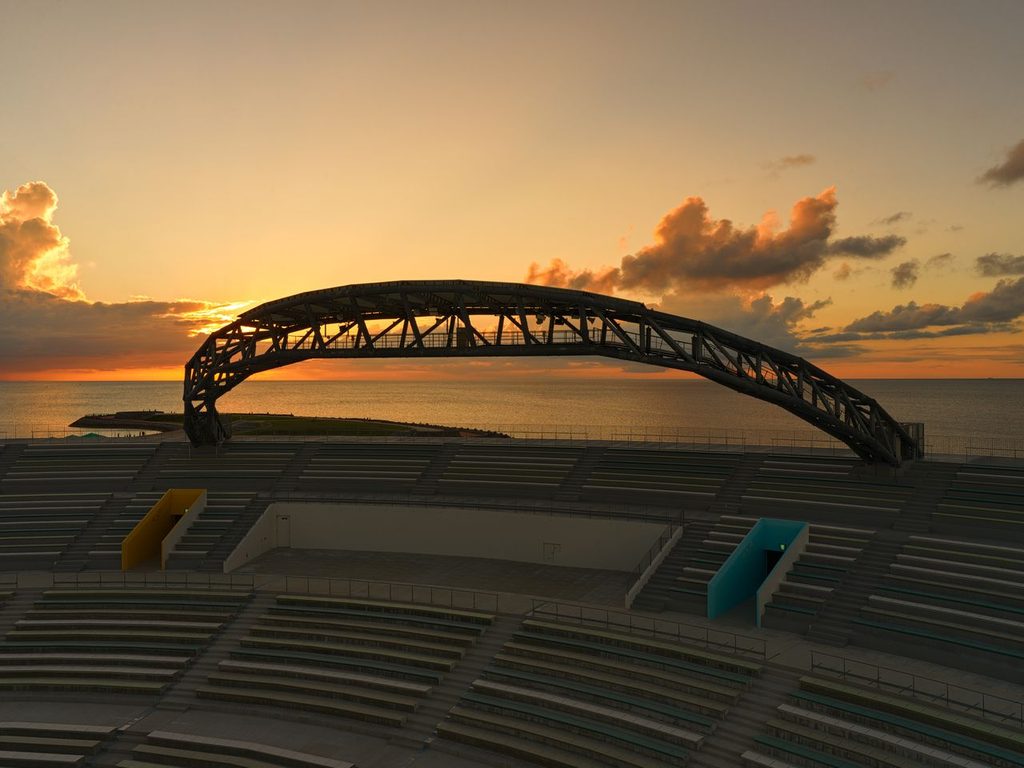

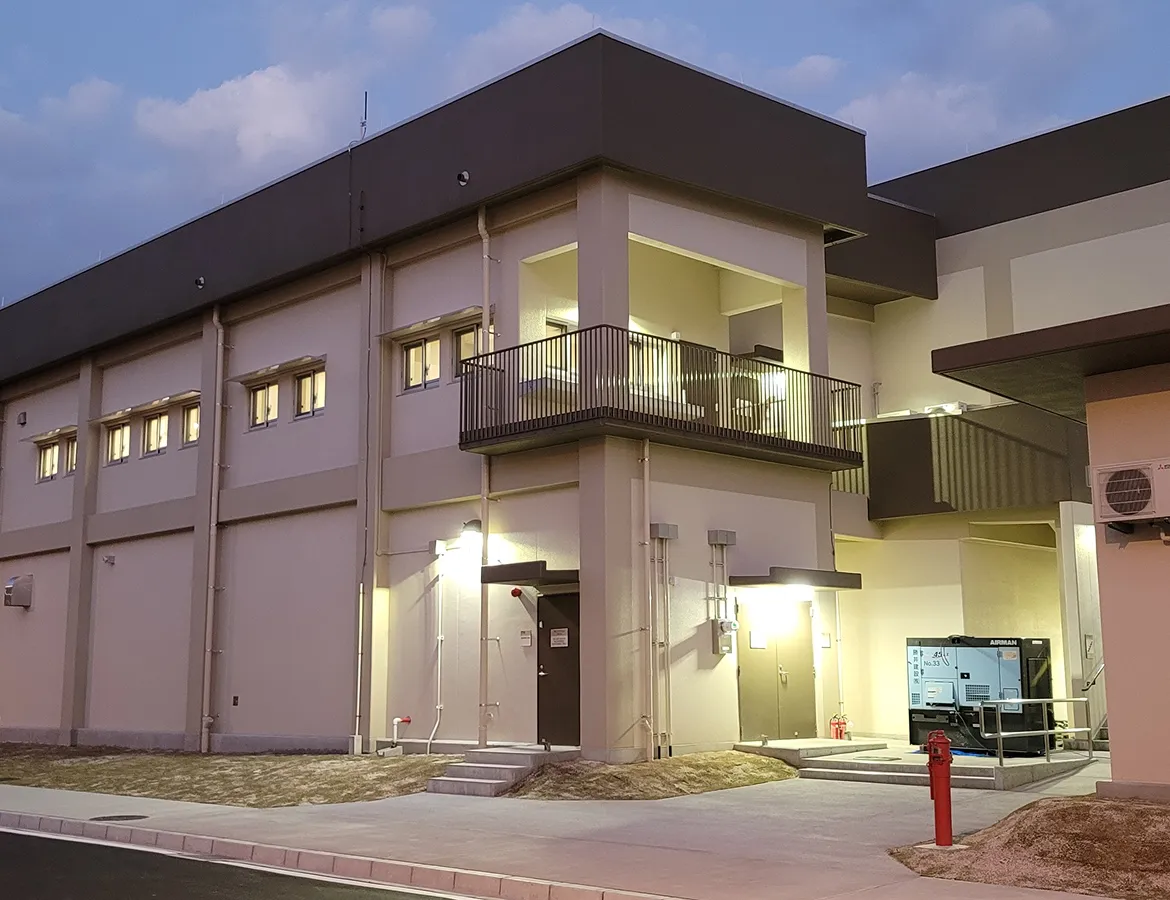
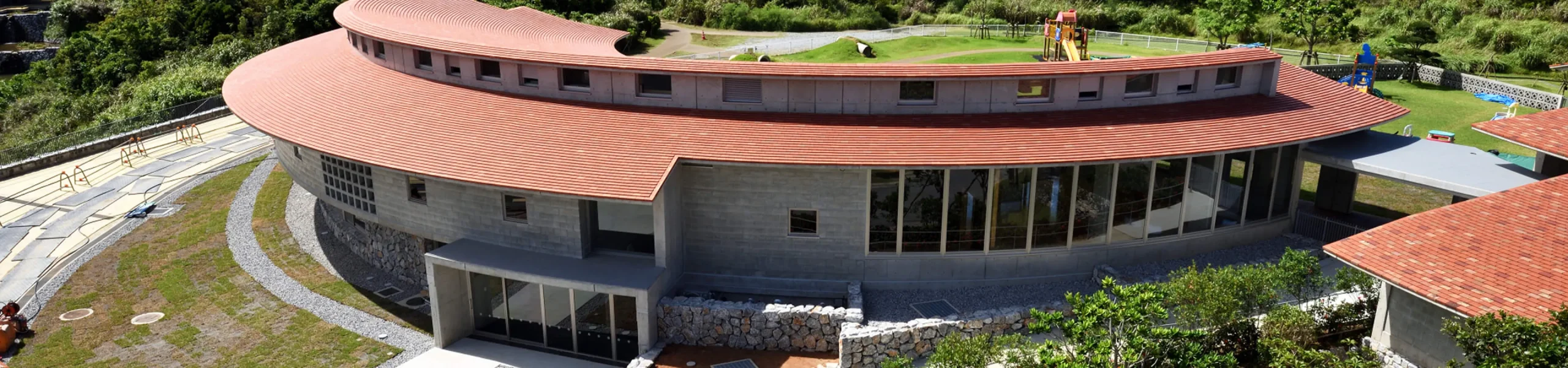

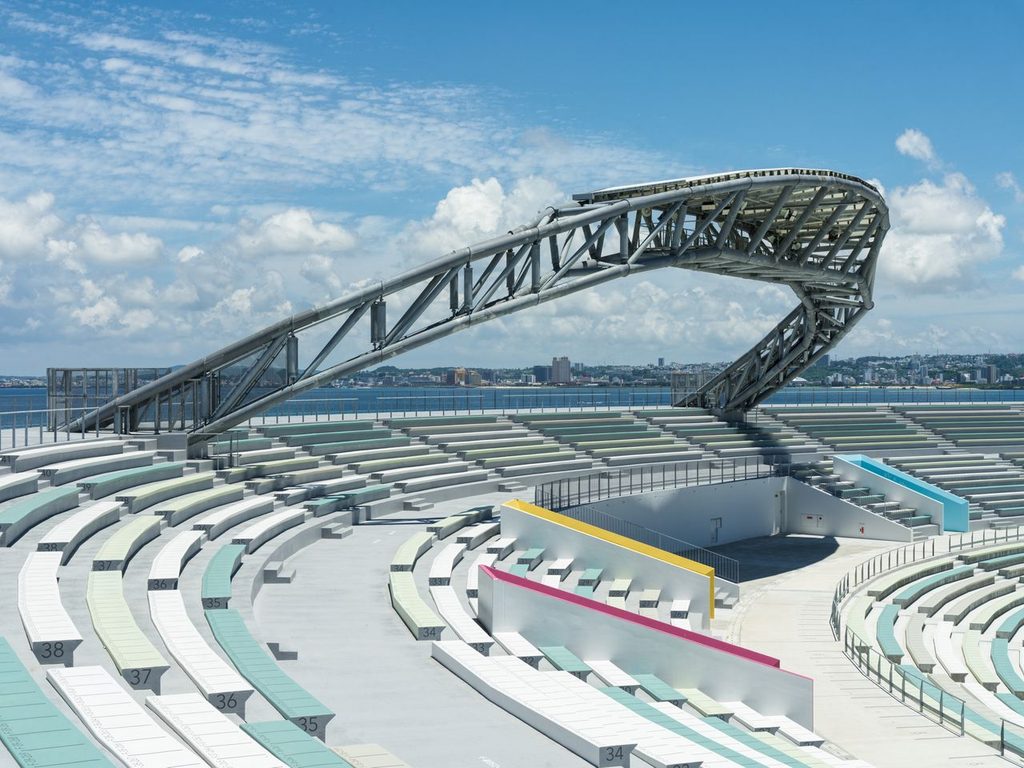
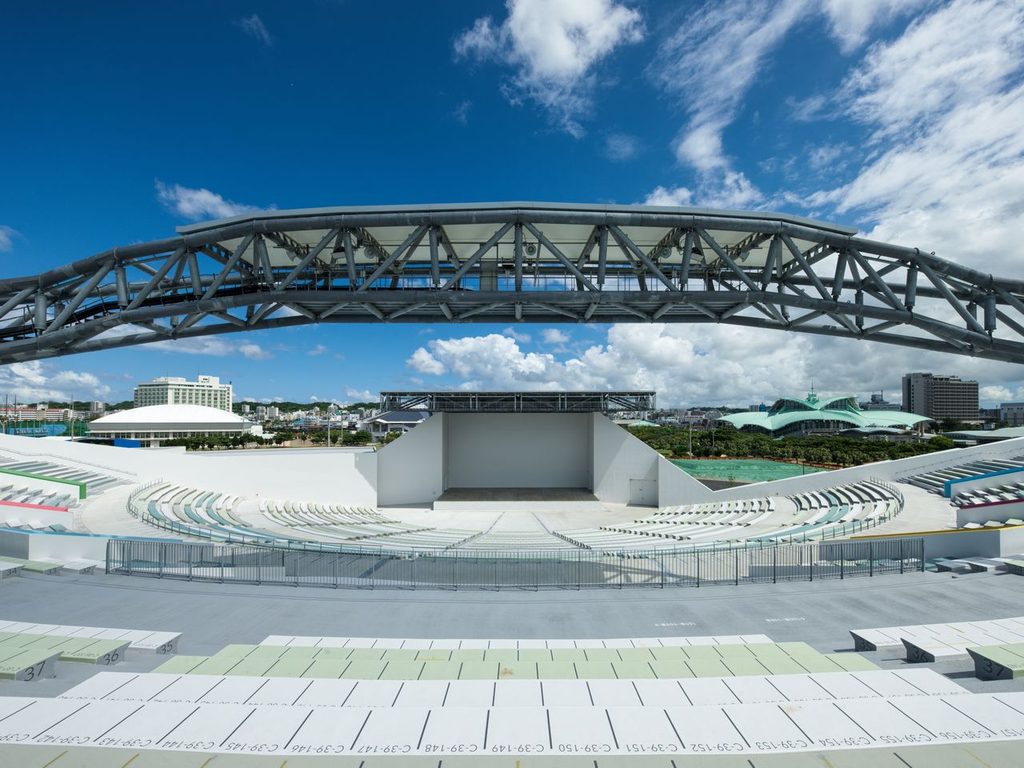
In summer 2026, a new landmark was completed in Ginowan City: the Ginowan Seaside Park Open-Air Theater.
Now known as the “AEC Open-Air Theater Ginowan,” the venue will soon welcome many visitors. American Engineering Corporation (AEC) was involved in the construction of the facility from the beginning of the project through its completion.
The open-air theater can accommodate approximately 8,000 people. But what kind of work went into creating the finished structure, and who were the people behind the scenes who supported the construction?
To find out, we spoke with four AEC team members who represented the many people involved in the project. They shared stories from the construction process, the work that left the strongest impression on them, and how they felt when they saw the completed theater.
The four interviewees were Mr. C, Project Site Representative; Mr. M, Supervising Engineer; Mr. T, Assistant Supervising Engineer; and Mr. A, Engineering Technician.
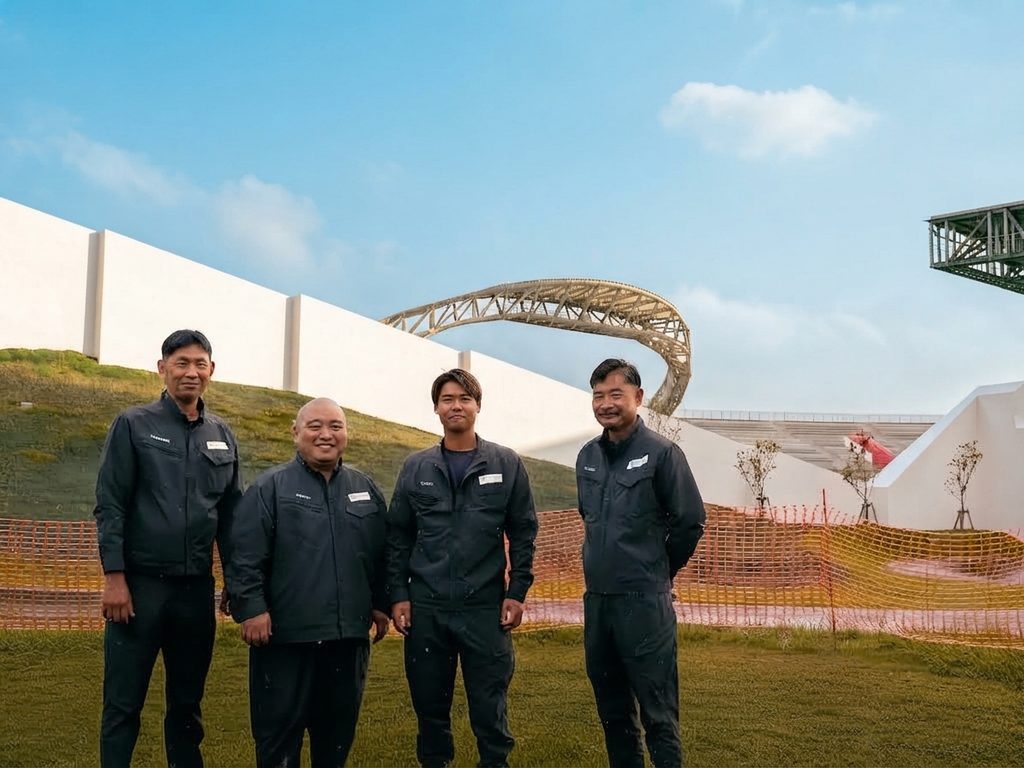
A Millimeter Matters: Constructing the Arch
One of the parts of the project that left the strongest impression was the construction of the pin-spot arch, a defining feature of the facility. Mr. C recalled.
The steel arch has a striking, dynamic appearance, but completing it required precise construction and repeated adjustments down to the millimeter.
Construction proceeded simultaneously from both sides of the arch, with the two sides ultimately needing to meet precisely in midair.
“If the base is off by even one millimeter, the two sides won’t meet at the top.”
As Mr. M explained, the work required a high degree of precision from the very beginning.
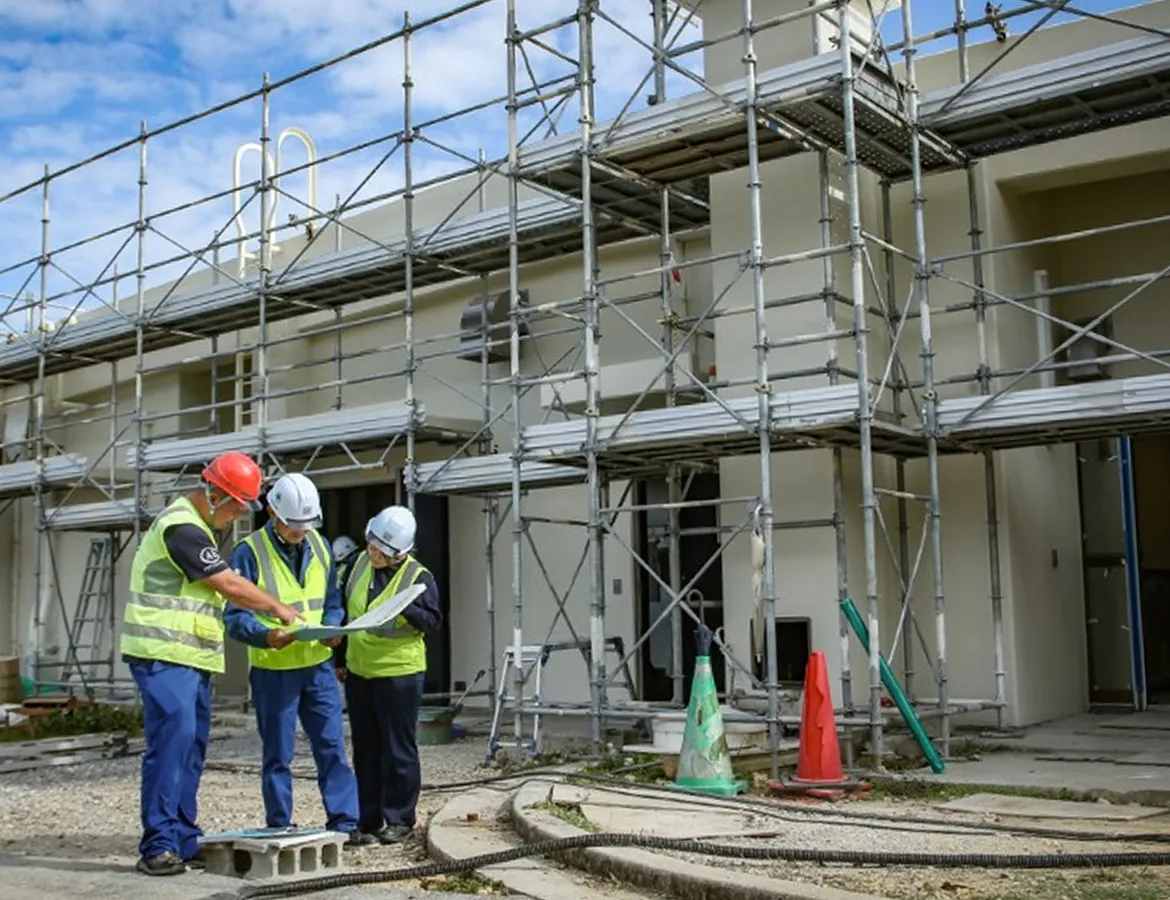
The team also had to manage many other tasks at the same time. With multiple operations taking place simultaneously, careful attention to safety was essential.
During the busiest periods of construction, Mr. M recalled that receiving dozens of calls a day from tradespeople and partner companies was part of the daily routine.
Moving the project forward involved more than construction itself. Coordinating people and schedules was also an essential part of the work.
When you look at the completed theater, what you see is one large structure.
But behind it is the work of the people on site, who repeatedly checked, coordinated, and adjusted the details throughout the construction process.
From Points to Lines, Lines to Surfaces, and Surfaces to a Three-Dimensional Structure
Looking back on the project, all four team members spoke about how they supported one another in different situations.
Of course, the AEC team was not alone in supporting the project.
The construction was carried out with the support of many partner companies.
One person who was particularly memorable for the team was a tradesperson responsible for sumidashi, the process of marking construction positions and reference lines on site based on the design drawings.
The tradesperson’s combination of accuracy and speed was particularly valuable in keeping the project moving within a limited schedule.
A construction site brings together many different types of professional expertise.
Each person has their own role, while also communicating and helping one another when needed.
This theater, too, was completed through the connection of many people’s work with the work of others.
“The Growing Pains of Construction”
When asked how he felt when he first saw the completed theater, Mr. T gave a simple answer: “It felt good.” In particular, he said that seeing the completed project in the final photographs made him feel glad to have been part of the construction.
For Mr. M, who was primarily involved in coordinating work on site, there was also a sense of having “fulfilled his responsibility.”
Meanwhile, Mr. C, the project site representative, recalled:
“I felt relieved, but also a little sad.”
During construction, the site had been a place where the team could move around freely. Once the project was complete, however, it was time to hand the site over to the next stage.
Something that had been in their hands for so long was now leaving them.
As they talked about that feeling, Mr. M offered these words:
“Design has its pains of creation. Construction has its pains of raising.”
Perhaps it is similar to the feeling of watching a child leave home after raising them yourself.
Mr. A also recalled how, toward the end of the project, many of the people who had filled the site began leaving all at once as they completed their respective assignments. Seeing the site suddenly become much quieter and less crowded made him feel a sense of loneliness.
Completing a project does not bring only a sense of accomplishment and relief.
After spending so much time at the site and working alongside so many people to bring the project together, there can also be a sense of sadness when it is time to let go. The team shared that completion brings together many different emotions, marking the end of one chapter in the project.
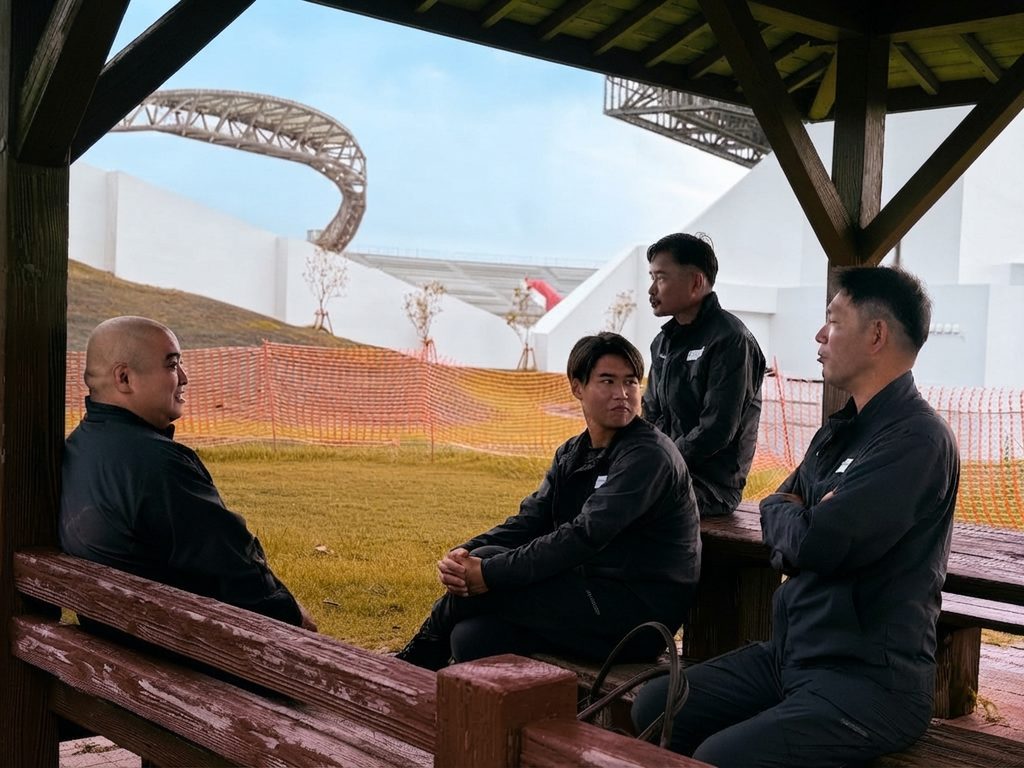
Learning to “Respect Others” on Site
For Mr. A, a young member of the team, this project was also an opportunity to gain valuable experience.
When asked how he had changed since joining the company, his senior colleagues said that his ability to coordinate and communicate had improved, and that he had become more patient.
Mr. A himself said:
“I learned that sometimes it’s important to let others take the lead without stepping in, and that it’s important to respect others as we work together.”
What New Scenes Will Unfold Here?
The completed theater will now serve as the “AEC Open-Air Theater Ginowan,” a place where many people will gather and spend time.
People will create their own experiences and memories in the audience and on the stage.
For the four team members involved in the construction, completion marks the end of one chapter.
But for the theater itself, it is the beginning of something new.
What kinds of scenes will unfold in this place that they helped build?
Even after leaving the site, the four team members will likely continue to watch from afar, each with their own thoughts, as people come to enjoy the place.